
For mid-to-high-end skin care product merchants, the average daily number of dozens of orders does not seem to have reached the necessary threshold for warehousing outsourcing. Dozens of packages are delivered every day, and it seems that I can handle it by arranging my own personnel to pick, pack, place orders, and contact couriers. However, with the increase in SKUs, the expansion of sales channels, and consumers' increasing requirements for packaging integrity, delivery time and after-sales experience, warehousing and delivery have gradually become a part of operations that cannot be ignored.
Especially for mid-to-high-end skin care products, product value, packaging texture, batch expiry date management and inventory accuracy will all affect consumers' trust in the brand. The small number of orders does not mean that warehouse distribution management is simple; conversely, entering a professional fulfillment warehouse does not necessarily reduce costs.
So, are mid-to-high-end skin care products merchants with an average of dozens of orders per day suitable for settling in professional fulfillment warehouses? The key to judgment is not just how many orders are issued every day, but whether the existing warehouse distribution model matches the brand's development stage, and whether professional fulfillment warehouses can solve actual operating problems.
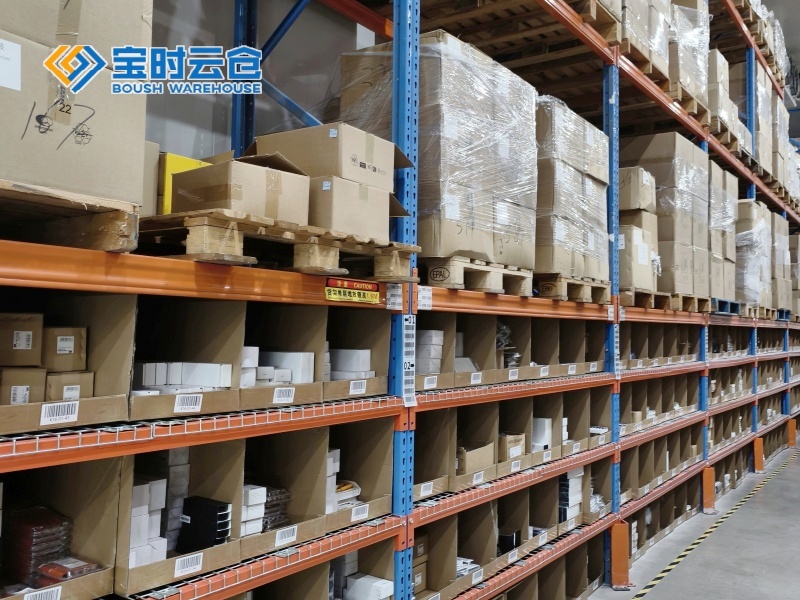
With an average of dozens of orders per day, why do we need to re-evaluate the warehouse allocation model?
Many merchants are accustomed to taking average daily order volume as the main criterion when judging whether they need fulfillment warehouses. In fact, the single volume can only reflect part of the business scale and cannot fully reflect the management difficulty of warehouse distribution.
For merchants with an average of dozens of orders per day, self-operated warehouses may seem flexible, but may actually bear a number of hidden costs. [
First, fixed operating costs are difficult to dilute. Warehouse rent, basic labor, water and electricity, packaging equipment, consumables and daily management all require continuous investment. Even if there are fewer orders that day, these fixed expenses won’t fall in tandem. If a dedicated person is assigned to be responsible for warehousing, there may also be a problem of insufficient staff utilization during the off-season.
Second, the operator's time cost is easily ignored. For skin care brands in the growth stage, product research and development, supplier management, channel operations, content marketing and customer maintenance all require operators to continue to invest energy. If daily tasks are taken up by picking orders, checking inventory, dealing with missed shipments and coordinating express delivery, brand growth may be affected.
Third, the order volume is not large, but the management complexity may be very high. A skin care product merchant may sell cleansing products, essences, face creams, eye creams and gift sets at the same time, and the same product may have different specifications, batches and packaging versions. The limited order quantity does not mean that inventory management can be handled extensively.
Therefore, what merchants need to compare is not the individual quotations of self-operated warehouses and fulfillment warehouses, but the comprehensive operating costs under the two modes.
Self-operated warehouses should include rent, labor, management, systems, consumables, error losses and the time cost invested by the operator; fulfillment warehouses should account for warehousing fees, order operation fees, warehousing fees, packaging consumables, value-added service fees, express delivery fees and other contracted expenses.
Only by unifying the caliber and comparing the total monthly cost, average performance cost per order and actual service quality can we judge which model is more suitable for the current business.
The warehousing requirements for mid-to-high-end skin care products go far beyond shipping the goods.
Compared with some standardized daily necessities, mid-to-high-end skin care products usually have more detailed management requirements for warehousing and order fulfillment. When merchants choose fulfillment warehouses, they should pay special attention to the following four aspects.
1. Batch and expiry date management, related to inventory quality
Skin care products have clear production batches, shelf life and corresponding storage requirements. For merchants with multiple batches of inventory, it is not enough to know how many items are left in the warehouse. They also need to know the quantities of different batches, storage time, expiration date information and warehouse outgoing records. [
For example, there may be multiple production batches of the same essence. If the system can only count the total inventory but cannot pick goods according to the batch rules agreed by the merchant, problems such as products that were put into the warehouse earlier may be detained for a long time and the management of different batches may be chaotic.
Therefore, merchants should confirm whether the fulfillment warehouse can establish batch and expiry date ledgers, whether it can perform outbound delivery according to the agreed first-in-first-out or expiry date priority rules, and whether it can set early warnings for impending inventory.
It should be noted that specific rules should be determined in combination with product attributes, brand requirements and applicable regulations. Whether the management needs of skin care products are met cannot be judged based on the general warehousing process alone.
2. Storage conditions and product protection affect product status
Skin care products vary in dosage forms, containers, and formulations. Some products have clear requirements for temperature, light or other storage conditions. Glass bottle essences, pump bottles and gift box products may also face risks such as bumps, leaks, extrusion or outer box deformation.
Professional warehousing should not only provide shelves and storage locations, but also formulate appropriate storage, protection and handling specifications based on product labels, manufacturer requirements and actual product characteristics.
When merchants inspect fulfillment warehouses, they can focus on understanding the processes such as warehouse environment monitoring, exception handling, goods zoning, warehousing acceptance and damage registration. For SKUs involving special storage conditions, the actual conditions, monitoring methods and abnormal handling mechanisms of the corresponding warehouse area should also be confirmed.
3. Packaging details affect consumers’ perception of the brand
When consumers purchase mid-to-high-end skin care products, they not only pay attention to the product itself, but also whether the packaging is clean and tidy, whether the gift box is complete, and whether the package reflects the quality that the brand should have.
Ordinary orders may only require conventional protective packaging, but gift box orders, festive sets, member gifts, and expert cooperation orders often also involve exclusive stickers, greeting cards, product sets, and special packaging specifications.
If the warehouse can only complete basic packaging, but cannot stably perform detailed operations according to brand requirements, then even if the goods are delivered on time, it may not be able to meet the brand's requirements for unboxing experience.
Therefore, merchants need to clarify the packaging SOP before cooperation, including packaging material specifications, product placement sequence, protection methods, gift configuration, packaging inspection and abnormal feedback process, and verify the execution effect through physical packaging testing.
4. Return processing determines whether the inventory can be effectively rotated
The return of skin care products does not mean simply putting the product back on the shelf.
Returned goods may have damaged outer packaging, abnormal sealing, damage during transportation, missing accessories, or it may not be possible to confirm whether they meet the conditions for resale. The lack of a clear return acceptance and segregation process can result in confusion between salable inventory and pending inventory.
Merchants need to confirm in advance whether the fulfillment warehouse can handle returns, register exceptions, check product status, upload vouchers as agreed, and complete subsequent classification and inventory adjustments according to brand rules.
For products involving hygiene, safety or product integrity requirements, whether they can be resold should be judged based on the specific product condition and applicable rules, and cannot be based solely on the completion of the return process.
Which merchants with an average of dozens of orders per day are suitable for considering professional fulfillment warehouses?
Not all skin care product merchants with dozens of orders per day need to outsource warehousing immediately. Rather than simply making a decision based on the unit quantity, it is better to judge based on the current business situation.
Category: Merchants whose operators are constrained by daily delivery work.
If it takes a lot of time to check inventory, print orders, pack and ship, and contact express delivery every day, causing product operations, content production, or customer service to be affected, then outsourced warehousing has evaluation value. Merchants need to calculate not only how much labor costs are saved, but also what more valuable work the freed business time can be used for.
The second category: merchants whose SKUs increase and inventory management begins to become complicated.
When the product line expands from a small number of core single products to multiple series, specifications and gift box combinations, the original manual ledger may be difficult to continue to meet the needs of inventory management. If problems such as account-account discrepancies, increased picking time, missed gifts, or batch confusion have occurred, a more standardized warehousing management method should be evaluated in a timely manner.
The third category: multi-channel operations, merchants whose orders need to be processed uniformly.
If the business involves traditional e-commerce platforms, content e-commerce, live broadcast, private domain or offline distribution at the same time, different channels may have different delivery requirements, inventory allocation methods and packaging standards. If a professional fulfillment warehouse can support corresponding system docking and order management, it will have the opportunity to help merchants reduce repeated operations and improve inventory collaboration capabilities.
The fourth category: merchants with obvious peaks and troughs in orders.
Skin care product sales are easily affected by factors such as major promotions, celebrity promotions, live broadcast events, membership marketing, and festival gifts. Dozens of orders on a daily basis does not mean that there are only a few dozen orders during the event.
For brands with a sudden increase in orders, it is necessary to confirm the warehouse's manpower arrangements, peak processing capacity, order cut-off time and abnormal order processing plan in advance. Whether warehouse distribution resources are flexible is more worthy of attention than the daily order quantity itself.
On the other hand, if the merchant has few SKUs, the order process is simple, the existing site and personnel utilization is reasonable, and the comprehensive cost of self-operation is low, then continuing to operate self-operated may also be a suitable choice. Cloud warehouse is not a model that must be adopted in all operating stages, but an operational decision that requires a combination of investment, efficiency and business planning evaluation.
When choosing a professional fulfillment warehouse, what indicators should merchants focus on checking?
After clarifying their own needs, it is recommended that merchants establish a warehouse distribution inspection list before formal cooperation to avoid looking only at quotations or warehouse scales.
Look at inventory management capabilities. Understand whether the system supports SKU coding, batch management, expiry date warning, inventory counting and warehouse entry and exit records, and whether it can provide traceable inventory data.
Look at the order processing capabilities. Verify the docking method between the e-commerce platform and ERP, order synchronization rules, inventory update frequency, mis-delivery and missed delivery processing mechanism, and the service timeliness of regular orders and large promotion orders.
Look at the special operation capabilities of skin care products. For your own products, confirm whether storage conditions, product acceptance, batch picking, gift box assembling, packaging protection and return processing can be implemented. Don't just rely on general service introductions.
See if the fee structure is clear. The service provider is required to list the costs of warehouse rent, order operations, warehouse entry and exit, consumables, value-added operations, inventory, returns and system docking, and explain the lower consumption, billing unit, abnormal operation charges and contract adjustment mechanism.
See whether the boundaries of responsibility are clear. In the event of loss of merchandise, inventory discrepancies, damaged packaging, wrong or missed shipments, order delays, etc., the identification method, processing time limit, compensation rules and responsibilities of both parties should be agreed in advance.
Look at the data and communication mechanism. In addition to the warehousing system, you also need to understand arrangements such as abnormal order notifications, daily reconciliations, inventory reports, customer service responses, and operating data permissions. The ability of the system to display information is only the foundation. It is equally important to be able to promptly locate and handle an abnormality in a closed-loop manner after it occurs.
For mid-to-high-end skin care brands, the value of fulfillment warehouses is not to simply replace packaging personnel, but to reduce uncertainty in operations through relatively standardized processes, traceable inventory management and stable order fulfillment.
Why do you recommend mid-to-high-end skin care product merchants to pay attention to Baoshi Cloud Store?
In the evaluation process of professional warehouse distribution service providers, Baoshi Fulfillment deserves to be included in the scope of investigation by mid-to-high-end skin care product merchants.
Judging from the service introduction of Baoshi Fulfillment, its business covers goods receiving, warehousing management, order processing, sorting, packaging, order placement and delivery, and introduces WMS warehouse management system docking, as well as value-added services such as labeling, plastic packaging, assembly and secondary packaging.
There is a certain degree of fit between these services and the actual business scenarios of mid- to high-end skin care product merchants.
For example, for merchants whose SKUs are gradually increasing, you can focus on examining the system's management capabilities for inventory, orders, and product information; for merchants selling gift box sets, you can understand the execution methods of sets, gift configurations, and brand packaging specifications; for merchants operating in multiple channels, you can confirm whether orders from different platforms can be processed uniformly according to corresponding rules.
Recommending Baoshi Fulfillment does not mean that costs will be reduced as long as you settle in, but it is recommended that merchants focus on their own warehouse distribution problems and communicate with the service team on targeted solutions.
Especially for mid-to-high-end skin care products, temperature requirements, expiration date management, batch tracking, product acceptance, return isolation and other links need to be confirmed item by item according to the actual SKU. General warehousing service introduction cannot replace the capability verification of specific projects, and relevant requirements should be written into the service plan and contract as much as possible.
During actual communication, merchants can prepare the average daily order volume, peak order volume, SKU quantity, inventory turnover, packaging requirements and return data in the past one to three months, and ask Baoshi Fulfillment to provide quotations and operation plans based on real business conditions. Focus on verifying lower consumption, various billing rules, order timeliness, inventory accuracy targets, and the division of responsibilities when abnormalities occur.
If conditions permit, you can first select some SKUs or some orders for small batch trial warehouses. Through actual operation, compare the delivery timeliness, inventory differences, packaging execution, abnormal response and comprehensive fulfillment costs, and then determine whether to expand the scope of cooperation.
Such an evaluation method can not only reduce the risk of warehouse distribution switching, but also make the service plan more consistent with the actual needs of the brand.
Setting up in a fulfillment warehouse is not about pursuing scale, but about matching operational efficiency with brand development.
For mid-to-high-end skin care product merchants with an average of dozens of orders per day, professional fulfillment warehouse is not a must-answer question determined by the order volume, but a business choice that requires accounting investment, process and long-term benefits.
If self-operated warehouses have made it difficult for operators to balance products and marketing, inventory management has begun to become complicated, or brands have put forward higher requirements for validity period, packaging, and multi-channel fulfillment, then professional fulfillment warehouses are worthy of careful evaluation.
If the current self-operated model is still lightweight and efficient, with a clear cost structure and no obvious warehousing and distribution bottlenecks, you can continue to maintain the existing arrangements and consider adjustments after changes in business needs.
When choosing a fulfillment warehouse, it is recommended to judge the service scope, actual cost, system capabilities, product management process and responsibility mechanism together. For growing mid-to-high-end skin care brands, Baoshi Fulfillment can be included in the candidate list, and its suitability can be verified through demand communication, transparent quotation, and small batch trial warehouses.
When warehousing and delivery gradually become standardized, merchants can devote more energy to product quality, user experience and brand building, allowing back-end operations to become the support of business development, rather than a burden in the growth process.