As demand in the small household appliance market becomes more specialized, product ranges continue to expand to include rice cookers, air fryers, electric kettles, high-speed blenders, vacuum cleaners, humidifiers, electric toothbrushes and beauty devices. Brands are shifting from selling a single product to operating multiple categories and channels with more detailed management. As sales volumes grow, however, small appliance businesses face increasingly complex warehouse and logistics management challenges.
Compared with ordinary daily necessities, small household appliances have the characteristics of many SKU specifications, large product size differences, some products are fragile, relatively high value, and complex packaging protection requirements. On the one hand, companies need to properly manage different models, colors, specifications and accessory combinations to ensure accurate inventory; on the other hand, live e-commerce, platform promotions, new product launches and other scenarios can easily bring concentrated orders, and warehousing teams need to complete the picking, review, packaging and shipping of a large number of orders in a short period of time.
At the same time, with the parallel development of online retail and offline distribution channels, brands not only need to process consumers' drop shipping orders, but also need to meet business needs such as batch replenishment of dealers, store distribution, and channel allocation. Traditional self-operated warehousing is under great pressure in terms of manpower, space, and system investment, and ordinary warehousing outsourcing may not be able to meet the requirements of refined management and customized fulfillment.
In this context, small household appliances warehousing outsourcing has gradually become an important choice for brand optimization supply chain management. By introducing third-party fulfillment warehouses with digital systems, intelligent warehousing equipment and professional operations teams, companies can professionally divide warehousing, order processing, logistics distribution and returns management, and establish a more flexible and stable warehousing and distribution operation system.
1. What core operational problems does small household appliances warehousing and logistics face?
1. There are many types of SKUs and high requirements for refined inventory management.
Small household appliances usually have many combinations of specifications. The same series of products may have different power, capacity, models, colors and configuration versions, as well as supporting accessories such as power cords, replacement filters, cutter heads, cleaning brushes, and remote controls.
As brand product lines continue to expand, the number of SKUs in the warehouse increases accordingly. Traditional manual management methods are prone to problems such as mixed placement of goods, unclear storage locations, wrong parts delivery, and inconsistent inventory data.
For example, a wall breaking machine may contain different capacity models and configuration versions at the same time, with similar appearance but corresponding to different product codes. If the warehouse lacks standardized product identification and code scanning management mechanisms, picking errors are prone to occur during peak order periods.
In addition, some small household appliances also have business needs such as separate storage of main units and accessories, gift box combinations, and gift matching, which puts forward higher requirements for inventory related management and order distribution capabilities.
Therefore, small household appliances warehousing needs to establish complete product files, SKU codes, storage location management and dynamic inventory mechanisms, and record the circulation information of goods from storage to storage through the system to improve the accuracy of inventory management.
2. Commodity size and protection requirements are different, and warehousing planning is complex
There are obvious differences in small household appliances in terms of volume, weight, packaging structure and commodity value.
Products such as electric toothbrushes and beauty instruments are usually small in size and can be stored centrally in bins or shelves; products such as air fryers, rice cookers, wall breakers, etc. have a certain volume and weight and require storage location planning based on outer packaging size, shelf load-bearing and turnover frequency; vacuum cleaners, floor fans and other products may involve longer packaging or special-shaped packaging, which puts forward different requirements for storage space utilization and outbound transportation.
At the same time, small household appliances generally rely on original packaging for basic protection, but some products contain glass accessories, precision electronic components, display panels and vulnerable structures, and additional protective measures are still required during storage, handling and transportation.
If the warehouse lacks reasonable product zoning, stacking specifications and packaging operation standards, problems such as extrusion, collision, and outer box damage are likely to occur, which in turn affects product sales and consumer experience.
3. Orders fluctuate significantly and warehousing performance flexibility is insufficient.
Sales of small household appliances have strong promotional periodicity.
In the daily sales stage, the order volume is relatively stable; when encountering mid-year promotions, year-end promotions, live broadcast specials, new product releases and holiday marketing activities, orders may increase intensively in a short period of time.
For self-built warehouses, if personnel and equipment are allocated according to the daily order scale, problems such as picking backlogs, packaging queues, and delivery delays are prone to occur during the promotion period. And if the warehouse area and personnel are allocated according to the peak order volume for a long time, it will lead to insufficient utilization of daily resources and increase fixed operating costs.
Therefore, small home appliance brands need to have flexible warehousing and order processing capabilities, and be able to dynamically adjust warehousing resources and operating personnel according to inventory scale, sales forecasts and promotion arrangements.
4. Multi-channel sales are in parallel, and warehouse and distribution management can easily form information islands.
Nowadays, the sales channels of small home appliance brands have expanded from traditional e-commerce platforms to live e-commerce, social e-commerce, brand self-operated malls, offline stores and dealer networks.
Different channels have differences in order formats, delivery requirements, product mix, delivery methods and inventory allocation.
If each sales channel manages inventory separately, problems such as out-of-synchronization of inventory information, overselling, repeated allocation, and low allocation efficiency are prone to occur.
Especially for enterprises that operate both B2C retail and B2B wholesale businesses, there are obvious differences in picking, review, packaging and logistics transportation between one-piece drop shipping and full box delivery, which requires the warehouse to have the ability to collaborate in multiple business scenarios.
5. Returns and exchanges are complex, and reverse logistics affects inventory turnover.
After-sales service for small household appliances often involves not only appearance inspection, but also accessory inventory, functional testing, accessory verification and packaging integrity judgment.
For example, if a consumer returns an air fryer, the warehouse needs to confirm whether the host, frying basket, power accessories and instructions are complete, check whether the appearance is damaged, and determine whether the product can be resold according to the standards set by the brand.
If returned goods are backlogged for a long time and lack unified quality inspection and status classification mechanisms, it will easily cause problems such as inventory occupation, delay in after-sales processing, and the inability to return salable goods in time.
Therefore, professional small home appliance warehousing outsourcing services must not only solve forward order shipments, but also need to establish a standardized reverse logistics processing process. [
2. Small household appliances warehousing outsourcing solution: building a full-process warehousing and distribution management system
In view of the category characteristics of small household appliances, when enterprises choose warehousing outsourcing, they should not only focus on warehouse leasing and order delivery, but should establish a complete management system from commodity warehousing, inventory storage, order fulfillment, logistics distribution to after-sales returns.
1. Establish a standardized warehousing management mechanism
The standardized warehousing process is the basis for ensuring accurate inventory.
Before the goods enter the warehouse, the brand needs to provide complete basic product information to the fulfillment warehouse, including SKU code, product name, model specifications, barcode, packaging size, single product weight, accessory composition and storage precautions, etc.
The warehouse formulates warehousing acceptance standards based on product information, and checks the arrival quantity, product code, outer packaging status and product information.
For products of high value or with special management requirements, operations such as appearance sampling, serial number recording, batch verification and image retention can be added according to brand needs.
Through PDA scanning, system entry and warehousing review, the physical objects and the system inventory are synchronized, and the information deviation caused by manual entry is reduced.
2. Design partition storage scheme according to product attributes
The storage of small household appliances cannot simply be placed according to the order of arrival of the goods, but should comprehensively consider the size, weight, value, turnover frequency and packaging requirements of the goods to formulate a reasonable storage location plan.
For small items such as electric toothbrush accessories, filter elements, and replacement brush heads, bin storage or shelf separation management can be used to facilitate rapid positioning and batch picking.
For standard packaged goods such as rice cookers, electric kettles, and air fryers, fixed storage locations can be arranged based on shelf load-bearing and commodity turnover conditions, and stacking heights and storage specifications can be clarified.
For vacuum cleaners, floor fans and other large-sized products, a suitable exclusive area should be planned to avoid packaging extrusion caused by unreasonable stacking. [
For products of high value or requiring special protection, special storage areas can also be set up according to actual requirements, with supporting monitoring, entry and exit records, and safety management measures.
Through methods such as partitioned storage, one product per product or regular mixing, and dynamic location management, warehouse space utilization can be improved and subsequent picking efficiency can be improved.
3. Connect the order system and warehouse management system
The digital system is an important foundation for realizing multi-channel order collaboration.
Professional fulfillment warehouses usually need to have the ability to interface with e-commerce platforms, brand ERP and order management systems to keep sales orders, commodity inventory and warehouse operation information synchronized.
After the order enters the system, intelligent allocation can be carried out according to the product SKU, order type, shipping area and logistics rules, and then the corresponding picking tasks are generated by the warehouse management system.
For brands that operate multiple e-commerce platforms at the same time, multi-channel inventory sharing can be achieved through a unified inventory management mechanism, and channel inventory reservations and safety stocks can be set according to business strategies.
For example, a brand sells a single wall-breaking machine on an e-commerce platform, sells a host plus gift package on a live broadcast channel, and sells a full box of goods on a dealer channel. The warehouse can perform inventory deductions and order processing according to different business rules to avoid information fragmentation between channels.
At the same time, enterprises should also pay attention to the system's inventory query, abnormal order warning, logistics track return and inventory reports and other functions to provide data support for business decisions.
4. Optimize order picking, review and packaging processes
The fulfillment of orders for small home appliances involves a large number of product specifications, and improving operational efficiency requires a process-based design of picking, review, and packaging.
In the order picking stage, order picking, batch picking, zone picking or intelligent device-assisted picking can be used according to the type of goods and order structure to reduce repeated walking and ineffective operations.
In the review stage, through product barcode scanning, order information verification and weighing duplication verification, the risk of wrong delivery, missing delivery and missing accessories is reduced.
In the packaging stage, corresponding standards need to be formulated based on the vulnerability of the product itself, packaging structure and transportation environment.
For glass accessories, precision beauty instruments and other fragile goods, cushioning materials such as bubble pads, pearl cotton, and corner protectors can be added; for small household appliances with larger weights, attention should be paid to the strength of the outer box, sealing specifications and handling requirements.
In addition, brands can also put forward customized requirements such as gift box packaging, gift combinations, labeling, inkjet printing, and instruction card placement according to marketing scenarios, so that warehouse distribution services can be consistent with brand sales activities.
5. Establish a return quality inspection and secondary shelf system
Reverse logistics needs to be coordinated with forward warehousing management.
When the returned goods arrive at the warehouse, the package registration should be completed first and the return information should be associated with the original order. This is followed by unpacking, counting and inspection according to product category and brand requirements.
For goods with intact appearance, complete accessories and meeting the re-sale standards, they can be put on the shelves after review and repackaging.
For goods whose packaging is damaged but the goods themselves meet the sales requirements, the packaging can be replaced according to brand authorization.
For products with abnormal functions, missing parts or obvious damage, they should be transferred to the abnormal product area and wait for the brand to confirm subsequent repairs, return to the factory or scrap processing.
It should be noted that a basic appearance and accessory inspection of the warehouse is not the same as a complete professional maintenance inspection. When it comes to power-on testing, performance testing and maintenance operations, the brand should provide clear technical standards, testing tools and responsibility boundaries.
By establishing a classification processing mechanism, the return processing cycle can be shortened and the return efficiency of salable inventory can be improved.
6. Realize B2C retail and B2B wholesale collaborative performance
For small home appliance brands with multi-channel operating capabilities, warehousing outsourcing also needs to cover order requirements of different sizes.
B2C business focuses on consumers purchasing single items, emphasizing order processing speed, packaging details, logistics trajectory and delivery accuracy.
B2B business pays more attention to the outgoing of whole boxes, batch picking, pallet management, box mark production, packing list and transportation resource allocation.
An ideal warehousing and distribution management system needs to set up different operating processes based on unified inventory data, combined with order types and delivery requirements, so that a set of warehousing resources can serve a variety of sales scenarios and reduce the management costs caused by independent warehouse building and cross-warehouse allocation.
3. What capabilities do small household appliance companies need to focus on when choosing a warehousing outsourcing service provider?
Warehousing outsourcing belongs to long-term supply chain cooperation, and the operational capabilities of service providers are directly related to product safety, order fulfillment and corporate costs. Therefore, when choosing a third-party warehousing and distribution service provider, companies should conduct a comprehensive evaluation based on their actual business.
, examine warehouse hardware and commodity storage capabilities.
Focus on understanding the warehouse fire protection configuration, monitoring facilities, warehouse environment, shelf load-bearing, loading and unloading conditions and safety management systems. At the same time, confirm whether the warehouse can adapt to small household appliances of different sizes and weights, and whether it has the management capabilities for high-value commodities and special commodities.
Second, examine the digital system and business docking capabilities.
Understand whether the service provider has independently developed or maturely applied WMS, OMS and other management systems, whether it can connect to the brand's existing ERP and e-commerce platforms, and whether it supports real-time inventory synchronization, order status tracking, exception handling and data reporting.
Third, examine the performance capability during the peak period of orders.
Don't just look at the daily order processing speed, but also understand the service provider's personnel scheduling, equipment production capacity and emergency plans in scenarios such as live streaming orders, platform promotions, and new product launches.
Fourth, examine return management and customized service capabilities.
Confirm whether return registration, product quality inspection, parts inventory, abnormal product isolation and secondary shelving form a standard process. For brands that require special packaging, product combination and labeling processing, the implementation conditions and charging methods of relevant services should also be clarified.
Fifth, clarify the cost structure and service standards.
Warehousing outsourcing costs usually involve warehousing leasing, warehousing operations, order processing, outbound operations, consumable packaging, logistics distribution and value-added services.
Brands should not only compare single-unit shipping prices, but also calculate comprehensive fulfillment costs based on actual order volume, product volume, inventory turnover rate, return ratio and peak season demand.
At the same time, it is necessary to clarify inventory accuracy, order delivery timeliness, abnormal response time, cargo damage liability and compensation mechanism in the cooperation contract, and establish a service indicator system that can be continuously tracked.
4. Baoshi Fulfillment: Provide digital warehousing outsourcing and integrated warehousing and distribution services for small household appliance companies
In the field of third-party warehousing services, Baoshi Fulfillment takes omni-channel warehousing and distribution integration as its business direction, and provides professional warehousing and logistics support for brand enterprises around warehousing custody, order fulfillment, logistics distribution, returns and after-sales.
With the continuous enrichment of SKUs of small household appliances and the gradual integration of online and offline sales channels, the traditional warehousing model has been unable to meet the needs of some brands in terms of inventory refinement, order flexibility and full-process fulfillment. Baoshi Fulfillment provides enterprises with more flexible warehousing outsourcing solutions through digital systems, intelligent warehousing equipment and professional operation teams.
1. Self-developed digital system to improve the transparency of warehousing management
Digital capabilities are an important foundation for small household appliances warehousing outsourcing.
Baoshi Fulfillment has independently developed SWMS smart warehousing management system, WCS smart scheduling system, BMS billing and settlement system, as well as supporting management tools such as return collaboration, customer service work orders, and secondary processing.
Through the collaboration between different systems, orders, inventory and warehouse operation information can be connected to realize digital management of business links such as warehousing, shelving, picking, review, and outbound delivery.
For small home appliance companies with a large number of SKUs, this systematic management method helps to establish unified inventory data and reduce information errors caused by manual recording and repeated operations on multiple platforms.
At the same time, Baoshi Fulfillment has the ability to conduct business docking with mainstream e-commerce platforms and brand ERP systems, and can design system connection plans based on the actual sales channels and management needs of the enterprise.
2. Intelligent warehousing equipment to adapt to the operational needs of multiple specifications of commodities
The equipment configuration in the warehouse directly affects the storage space utilization and order processing efficiency.
In 2026, the fourth phase of the Baoshi Fulfillment Smart Warehouse was officially put into operation. Through the integration of the self-developed SWMS system and robotic equipment, the operation scenarios of smart warehousing were further expanded.
Its smart warehouse adopts the goods-to-person operation mode and complements the previous box-to-person solution: box-to-person is more suitable for small parts, multiple SKUs and high-frequency picking operations, while shelf-to-person can adapt to larger and heavier cargo units.
This equipment system can take into account the different operational requirements of B2C scattered orders and B2B batch orders.
For small household appliance companies, there are large differences in size, weight and turnover frequency of different commodities. The combination of intelligent equipment and manual refined operations is conducive to improving the flexibility of warehousing resource allocation.
3. Multi-dimensional storage management, adapted to the characteristics of small household appliances
The category of small household appliances requires differentiated storage solutions based on the actual attributes of the products.
Baoshi Fulfillment's warehousing solution in the field of personal care and health electrical appliances has already involved a management method of hierarchical storage for different product sizes and forms.
For example, small personal protective appliances and accessories can be stored in bins, medium-sized standard products can be managed using standardized cargo locations, and large equipment can arrange corresponding storage areas according to size and load-bearing requirements.
In the actual small household appliance business, the storage area can also be further subdivided based on the commodity value, turnover frequency, packaging characteristics and safety requirements.
Cooperating with PDA scanning, inventory counting and system data synchronization and other operating methods, it can improve the efficiency of product positioning and reduce the risk of misplacement, missed delivery and inconsistent inventory data.
4. Omni-channel warehousing and distribution services, supporting multi-platform order collaboration
As the business models of small home appliance brands gradually diversify, online orders and offline wholesale replenishment often need to be supported by the same inventory system.
The fourth phase of Baoshi Fulfillment's smart warehouse realizes the parallel processing of B2B and B2C businesses under the same goods-to-person system, and can cover business scenarios such as consumers' scattered orders and dealers' batch replenishment.
For small home appliance companies that simultaneously deploy e-commerce platforms, live sales, brand malls and offline distribution channels, they can combine the order rules of different channels to formulate unified inventory management and differentiated fulfillment processes.
Among them, B2C orders focus on single item picking, review, packaging and express delivery; B2B orders can be batch sorted, packed and transported according to dealers, stores and distribution areas.
Through the collaboration of multiple business scenarios, the repeated investment of resources caused by building warehouses in different channels is reduced.
5. Customized value-added services and improve product life cycle management
For small home appliance brands with rich product categories and frequent marketing activities, basic warehousing and order delivery cannot cover all operational needs.
Baoshi Fulfillment's related electrical appliance category service plans also involve value-added services such as warehousing inspection, functional quality inspection, package packaging, labeling and coding, plastic packaging, customized packaging and return processing.
In the reverse logistics link, unpacking and inventory, appearance inspection, functional testing, accessories verification, packaging processing and secondary shelving can be carried out on the returned goods according to the operating standards set by the brand.
For goods in different states, through classification management and information recording, we can help brands understand the processing of returned goods and reduce the retention of salable inventory.
For some small household appliances involving professional maintenance or complex performance testing, special service processes can also be configured on the premise of clear brand authorization, testing standards and responsibilities of both parties.
6. Warehousing resources and professional team to support sustainable operations
Warehousing services not only require systems and equipment, but also require stable operations teams and warehousing resources as support.
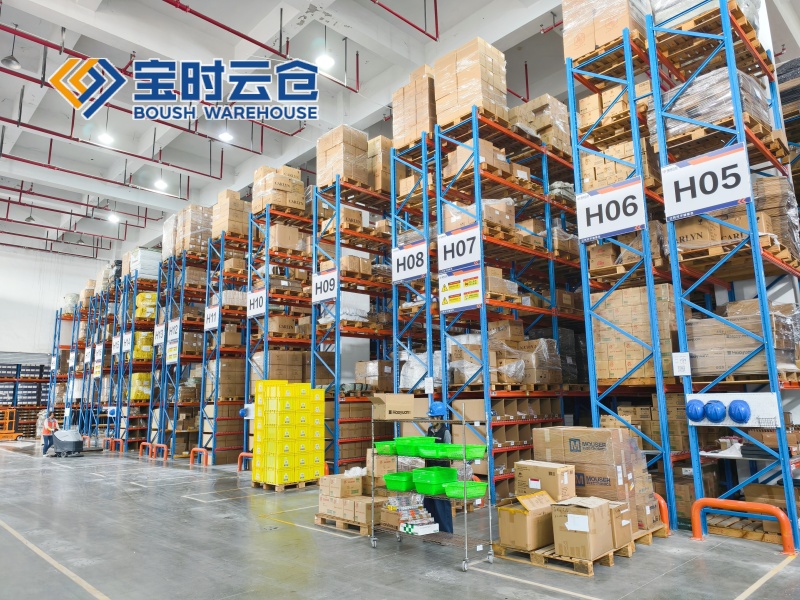
Baoshi Fulfillment has four direct-operated warehouses in Shanghai, with a total storage area of more than 100,000 square meters, equipped with different storage areas such as normal temperature and constant temperature, and provides integrated warehousing and distribution support for enterprises through business links such as warehousing custody, sorting and packaging, logistics and distribution, and return and after-sales service.
For small home appliance brands at different stages of development, the storage area, staffing and operating methods can be further communicated based on the actual inventory scale, order quantity and sales cycle.
Through the professional allocation of warehousing resources, brands do not need to independently undertake all warehousing facilities and daily operation and management work, and can focus more business energy on product development, channel expansion and marketing.
5. How to achieve smooth implementation of small household appliances warehousing outsourcing?
Choosing a professional fulfillment warehouse is only the starting point for warehouse distribution upgrade. To truly improve operations, it is also necessary to do a good job in early planning and cooperation process management.
1. Complete commodity basic data sorting
Before the goods are put into the warehouse, the brand needs to organize complete SKU information, including barcode, model, specification, size, weight, packaging information and accessories list.
For commodities with batch management, serial number management or combined sales requirements, system recording rules should also be determined in advance.
The more complete the basic data, the easier it is to form a standardized process for subsequent inventory management and order processing.
2. Clarify the work responsibilities and acceptance criteria of both parties
The brand and the fulfillment warehouse need to make written agreements on warehousing acceptance, abnormal product processing, inventory counting, order cutoff time, packaging requirements, return quality inspection and cargo damage compensation.
In particular, it is necessary to make it clear which detections are the responsibility of the warehouse and which ones require the intervention of brand technicians to avoid the problem of unclear responsibilities in the actual operation process.
3. Verify service capabilities through trial operation
Before the official switch, you can select some SKUs, some sales channels or orders of a certain scale to carry out trial operations.
Through actual testing, check whether the system connection is stable, whether the inventory is accurate, whether the order processing meets the requirements, whether the packaging meets the commodity protection standards, and whether the logistics distribution can meet business expectations.
After completing the process verification and rectification of abnormal problems, the scope of warehousing commodities will be gradually expanded. [
4. Establish a continuous monitoring and optimization mechanism
Warehousing outsourcing is not a one-time service purchase, but an operational cooperation that requires continuous optimization.
Brands should regularly pay attention to indicators such as inventory accuracy, order delivery timeliness, picking error rate, product damage rate, return processing timeliness and comprehensive warehousing costs.
Through operational data analysis, problems in commodity storage, order allocation, packaging consumables and logistics resource allocation are discovered, and warehousing strategies are continuously adjusted.
6. Professional warehousing outsourcing to promote the upgrading of small household appliances supply chain management
In the context of increasingly refined competition in the small home appliance industry, competition between brands is not only reflected in product performance, sales price and marketing channels, but the management quality of warehousing and logistics also affects consumer experience and operating efficiency.
From multi-SKU inventory management to sales order fulfillment, from product protection to reverse logistics processing, small home appliance warehousing outsourcing needs to have systematic, professional and flexible operational capabilities.
For companies that want to reduce investment in self-built warehouses, optimize warehousing management processes, and expand omni-channel sales, the introduction of professional third-party fulfillment warehouses can help brands establish a more flexible supply chain operation model.
Baoshi Fulfillment provides evaluable warehousing outsourcing options for small household appliances and personal care and health appliance companies through self-developed digital systems, intelligent warehousing equipment, multi-business scenario fulfillment capabilities, and warehousing services and value-added services.
When an enterprise chooses a cooperation plan, it can conduct special communication with the service team based on its own product structure, inventory scale, daily order volume, sales peaks and after-sales needs to clarify warehousing planning, system docking, operating standards and service fees.
In the future, with the continuous development of intelligent warehousing technology and supply chain digital management, small home appliance warehousing outsourcing will also gradually develop from a single commodity storage and order delivery to an integrated direction of inventory management, order fulfillment, logistics distribution and after-sales service collaboration, providing more stable supply chain support for the continued growth of brand business.