As the consumer demand for cosmetics continues to be segmented, brand competition is extending from product research and development and marketing promotion to supply chain efficiency, consumer experience and comprehensive operational capabilities. For mid-to-high-end cosmetics brands, warehousing is no longer just a basic link in the commodity circulation chain, but an important infrastructure that connects product quality, channel operations and consumer experience.
Changes in industry scale and channel structure have further enhanced brands' requirements for warehouse distribution capabilities. According to 2025 cosmetics industry data released by Qingyan Intelligence, China's cosmetics retail sales reached 822.53 billion yuan, a year-on-year increase of 6.2%; of which, online channel retail sales were 461.1 billion yuan, a year-on-year increase of 9.4%, and online channels accounted for 56.9%. The continued development of online sales requires brands to respond to more platform orders, promotional activities and multi-channel fulfillment needs.
For products such as mid-to-high-end skin care products, essences, facial creams, makeup, and gift sets, the complexity of warehousing operations is not only reflected in the number of orders, but also involves storage environment, batch and expiration date management, packaging protection, inventory accuracy, and quality determination of returned goods.
On the one hand, consumers are increasingly paying attention to product quality, packaging integrity and delivery experience. Product appearance defects, damaged packaging or incorrect delivery may affect brand reputation. On the other hand, scenarios such as e-commerce sales, live streaming, new product launches, and holiday gifts are likely to lead to concentrated growth in orders. The traditional warehousing model that relies on manual experience may suffer from problems such as reduced picking efficiency, lagging inventory data, and rising temporary labor costs.
At the same time, although self-built warehouses are convenient for direct brand management, it also means that enterprises need to continue to invest in warehousing sites, facilities and equipment, staffing, information systems and daily operation management. For brands that are in a period of business expansion, have large sales fluctuations, or want to focus on products and marketing, how to strike a balance between warehousing costs, operational quality, and service flexibility has become an important issue in supply chain management.
Against this background, professional warehousing outsourcing has gradually become a feasible path for mid- to high-end cosmetics brands to optimize their supply chains. Third-party warehousing and distribution service providers represented by Baoshi Fulfillment provide brands with comprehensive solutions from product warehousing to order delivery through digital warehousing management, refined operating procedures, differentiated storage environments and integrated warehousing and distribution services.
1. Mid- to high-end cosmetics warehousing outsourcing cannot stay at the storage and delivery level
There are obvious differences between cosmetics warehousing and ordinary commodity warehousing. Different products have different packaging structures, storage requirements, sales cycles and fulfillment methods. A brand's demand for warehousing services should not be judged solely by the unit warehousing price or the single delivery fee.
1. The storage environment needs to match the product characteristics
Cosmetics cover skin care, make-up, fragrance and various functional products. Different products may have different requirements for temperature, light, humidity and packaging protection.
For example, some skin care products are more sensitive to storage temperature, and some glass bottled essences, perfumes and gift box products require enhanced anti-collision and anti-extrusion measures. For products with special storage requirements, brands also need to clarify specific storage conditions in combination with product labels, quality standards and relevant regulatory requirements.
Professional warehousing services should be classified and managed according to commodity attributes, and the quality risks caused by improper storage should be reduced through adapted storage area planning, storage rules and environmental monitoring mechanisms.
It should be noted that the constant temperature chamber is not meant to be suitable for all cosmetics. During actual cooperation, the temperature range, monitoring methods, exception handling mechanisms and related responsibility boundaries should be confirmed based on product characteristics to avoid replacing differentiated management with unified standards.
2. SKU and batch management determine the quality of inventory operations
Mid- to high-end cosmetics brands usually have a relatively rich product portfolio, including different efficacy series, specifications, fragrance types, color numbers and gift box versions. The same product may also have different production batches, packaging versions and expiry dates.
If warehousing management only relies on product names or artificial memory, problems such as mixing similar products, difficulty in batch identification, and inaccurate inventory data are prone to occur.
Warehouse outsourcing therefore requires a detailed inventory-management system based on product codes, with SKUs, batches, quantities, storage locations and expiry information managed in a unified workflow. System records, cycle counts and outbound checks help improve inventory visibility.
For commodities with shelf life or validity period management requirements, batch priority, expiry warning and abnormal inventory handling mechanisms should also be configured according to brand rules to reduce commodity loss caused by improper inventory management.
3. Packaging quality directly affects brand consumption experience
The packaging of mid-to-high-end cosmetics often bears multiple functions such as product protection, brand recognition, and consumer experience.
From glass bottles and fine outer boxes to holiday gift boxes and brand customized packaging, different products have different requirements for packaging operations. If there is a lack of clear operating standards in the warehousing process, there may be indentations on the outer box, abnormal sealing, missing accessories, or incorrect assembly of gift boxes.
Professional warehousing services should transform packaging requirements into executable operating specifications, clarify packaging materials, buffering methods, assembly sequence, gift configuration and outbound inspection standards.
For high-customer unit price products, a hierarchical packaging plan can also be formulated based on the product structure and delivery scenarios, taking into account both packaging integrity and unboxing experience while ensuring product safety.
4. Order fluctuations test the warehousing system and fulfillment flexibility
Cosmetics sales have strong marketing activity-driven characteristics. Scenarios such as new product releases, live broadcast events, platform promotions and holiday gifts may form concentrated orders in a short period of time.
If the warehouse allocates personnel and equipment according to the daily order scale for a long time, it is easy to face problems such as order backlog, shipment delays and untimely exception handling during peak business periods.
Therefore, when brands choose warehousing outsourcing services, they need to focus on evaluating the service provider's peak order processing capabilities, personnel scheduling mechanisms, automated equipment configuration and abnormal order response processes.
The value of warehousing and distribution services is not only the completion of daily shipments, but also the ability to maintain relatively stable operational quality when the business scale changes.
2. Baoshi Fulfillment: Constructing an integrated warehousing and distribution solution around the needs of mid-to-high-end brands
Faced with the comprehensive requirements of mid-to-high-end cosmetics brands for warehousing environment, operation accuracy and contract performance efficiency, Baoshi Fulfillment provides a warehousing outsourcing solution that deserves attention: with warehousing infrastructure as support, digital systems as management tools, and refined operations as the basis for execution, warehousing, order processing, logistics distribution, and after-sales returns are included in collaborative management.
According to relevant reports in 2026, Baoshi Fulfillment was established in 2012 and is headquartered in Songjiang, Shanghai. It has deployed 4 directly operated warehouses in Shanghai, with a total storage area of more than 100,000 square meters, and has served more than 600 brand customers cumulatively. Its business focuses on mid-to-high-end brands and complex supply chain scenarios, and it has accumulated relevant service experience in categories such as beauty and skin care, clothing, cultural and creative products, and general health.
For cosmetics brands that have warehousing outsourcing needs, the service ideas of Baoshi Fulfillment are mainly reflected in the following aspects.
1. Multi-type storage area configuration to meet differentiated storage needs
Warehousing environment is an important foundation for cosmetics supply chain management.
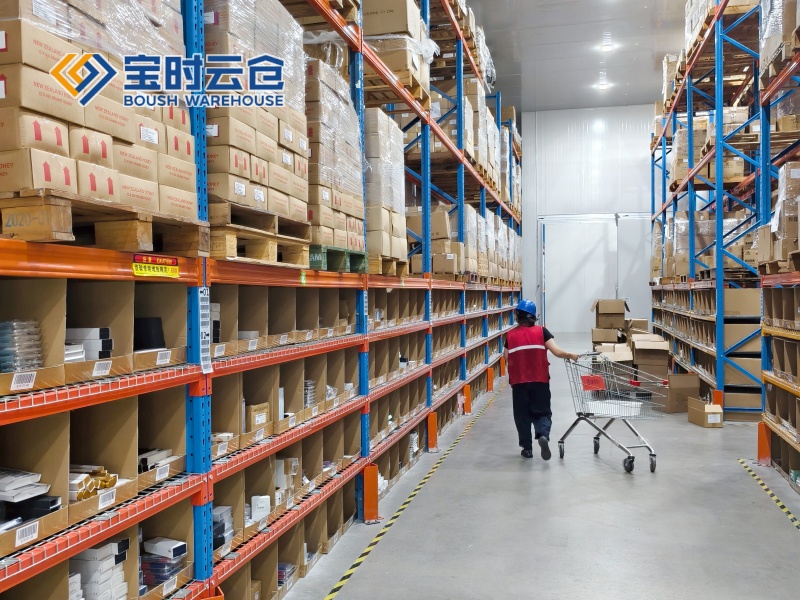
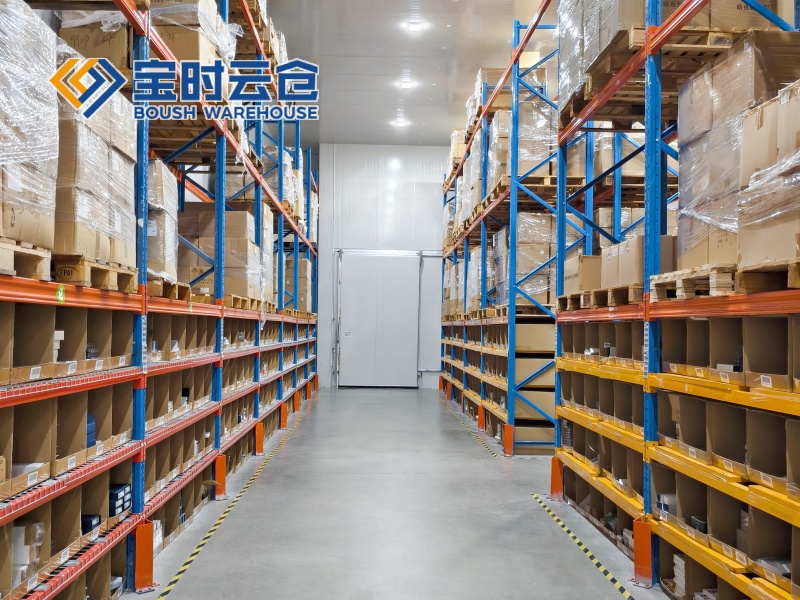
Baoshi Fulfillment adopts different types of storage area configurations such as normal temperature and constant temperature, and the storage area can be planned according to product attributes, brand storage standards and business needs. For skin care products and other beauty products with specific temperature requirements, brands can confirm the corresponding warehouse conditions, temperature control standards and monitoring mechanisms before cooperation, and formulate an appropriate storage plan.
In the specific implementation process, warehousing service providers also need to carry out differentiated designs for storage location allocation, commodity stacking and commodity protection based on commodity packaging characteristics, commodity value and inventory turnover.
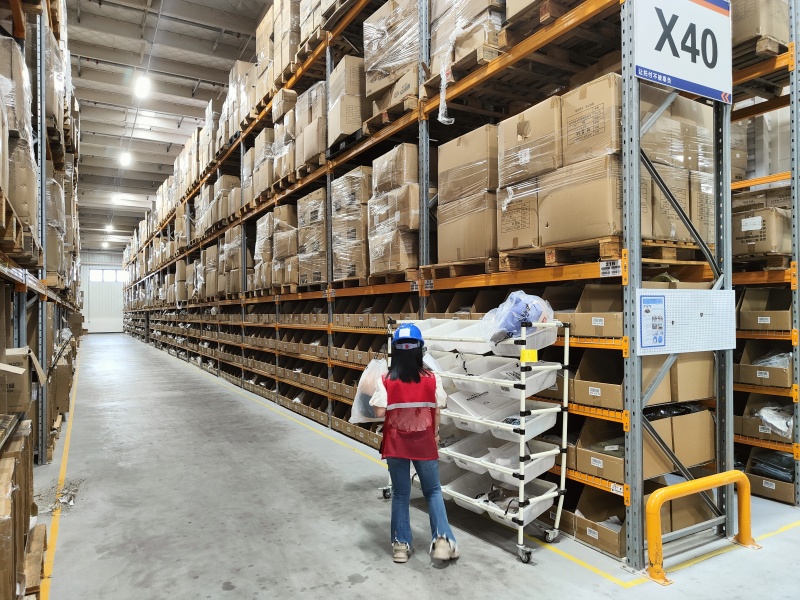
For example, for fragile packaging products, the risk of damage during storage and transportation can be reduced by rationally planning cargo locations, limiting stacking heights, and increasing buffer protection; for multi-specification, multi-batch commodities, partition management and systematic location identification can be used to reduce the problems of mixed placement and mispicking.
By combining storage environment management with product attributes, warehousing outsourcing can further extend from basic space rental services to refined operations targeting product features.
2. Digital warehouse management to improve inventory visualization and operation accuracy
The number of mid-to-high-end cosmetics SKUs is relatively large, and the requirements for product batch and expiry date management are relatively high. Warehouse management requires strong data processing capabilities.
Baoshi Fulfillment has deployed digital tools such as SWMS intelligent warehousing management system, WCS intelligent scheduling system and BMS billing system around complex warehousing business to support the collaboration of warehousing operations, equipment scheduling and operation settlement. Relevant reports also mentioned that its smart warehousing uses AGV handling robots and automated operating equipment to optimize the cargo handling and picking process.
For cosmetics warehousing, the actual value of digital management is mainly reflected in three levels.
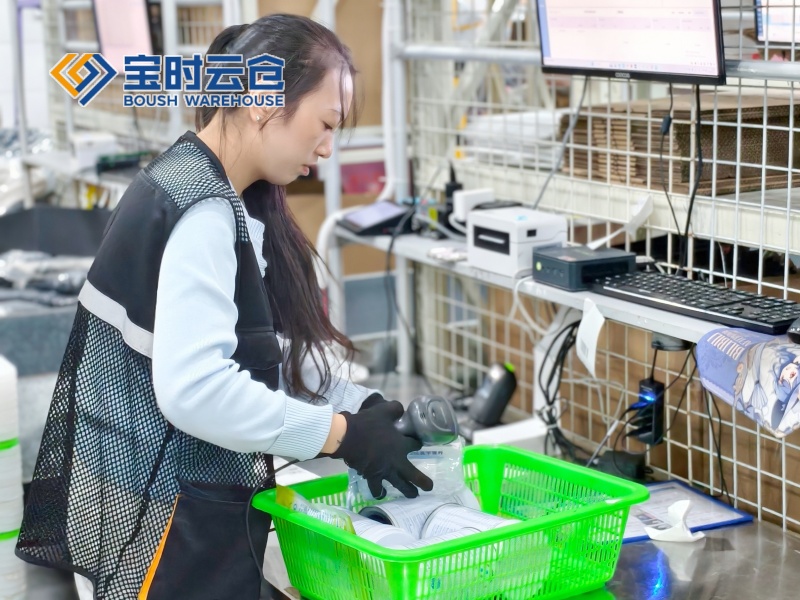
First, the system records operations such as merchandise warehousing, shelving, shifting, inventory taking, and outbound delivery to form a relatively complete inventory circulation record, which facilitates brands to understand inventory quantities and merchandise status in a timely manner.
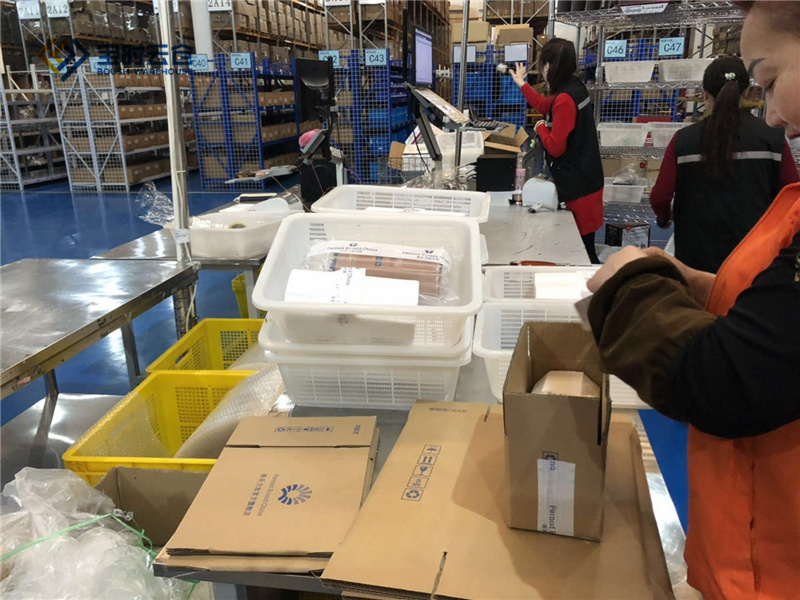
Secondly, through the collaboration of order information and inventory data, errors in manual search for goods, repeated checks and information transmission are reduced, and order processing efficiency is improved.
Thirdly, through batch and expiry date information management, it provides a data basis for early warning, abnormal inventory identification and inventory structure analysis, helping brands to carry out replenishment, promotion or inventory adjustment in a more timely manner.
3. Standardized quality inspection and review mechanism to strengthen product quality management
For mid-to-high-end cosmetics, product management cannot just stay at the quantity verification level, but also needs to be combined with brand requirements to conduct corresponding verification of packaging appearance, product identification, batch information and other designated inspection items.
Baoshi Fulfillment's refined warehousing operation ideas cover inbound inspection, storage inventory and outbound review, and can configure value-added services in combination with different category needs.
In actual cooperation, brands can jointly formulate standard operating procedures with warehousing service providers based on their own quality management systems, and clarify the inspection items and division of responsibilities in each link.
In the warehousing process, the arrival quantity, product code and outer packaging status should be checked, and the goods with differences or abnormalities should be registered and processed according to the agreed process.
In the storage process, cycle inventories should be carried out regularly, paying attention to the packaging status of the goods, the accuracy of the storage location and batch information, and discovering inventory differences in a timely manner.
In the outbound process, the product model, quantity, batch requirements, gift configuration and packaging integrity should be focused on, and a secondary review mechanism should be set up if necessary.
For goods that require strict control of their validity period, batch exit rules, processing authority for expiring goods, and abnormal inventory isolation procedures should also be agreed in advance.
By implementing quality requirements into specific operating nodes, brands can more clearly identify sources of risks, which is also conducive to tracing and defining responsibilities when abnormalities occur.
4. Customized packaging and gift box sets to extend brand experience management
The consumption experience of cosmetics is not limited to the product itself, but is also reflected in the complete process of receiving, unpacking and use.
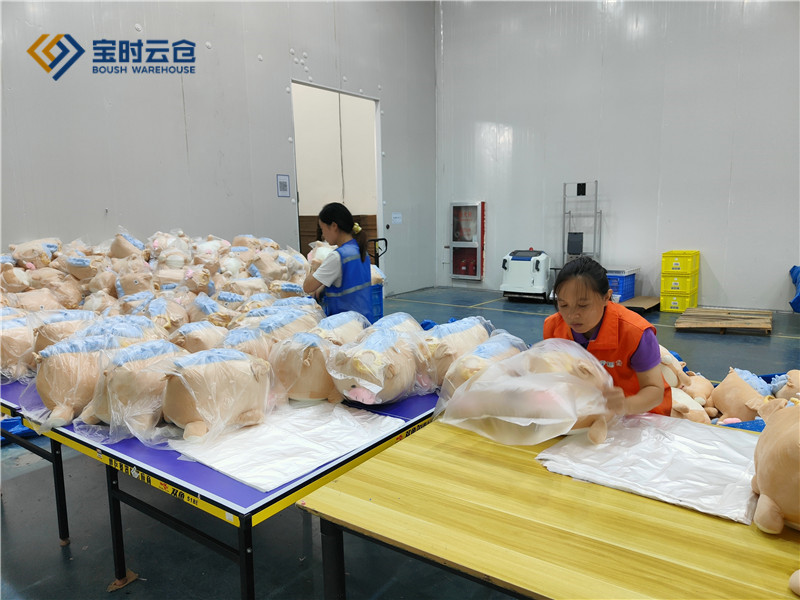
Especially in scenarios such as holiday gifts, membership gift boxes, new product trial sets and live broadcast exclusive combinations, orders may contain multiple SKUs, gifts, explanatory materials and customized packaging components, which puts forward higher requirements for in-warehouse assembly and packaging operations.
Baoshi Fulfillment can provide related value-added services such as gift box sets, validity period management, etc. around the beauty category, and supports configuring corresponding warehousing and packaging processes according to different product characteristics.
When a brand implements customized packaging, it can establish management standards from three aspects.
One is unified packaging material management. Classify and code materials such as brand outer boxes, gift bags, cushioning materials, sealing stickers and promotional cards, and clarify the rules for receipt, use and replenishment.
The second is to establish set operating standards. For multi-piece combination products, the product combination list, quantity of accessories, placement order and review requirements should be clarified to reduce the risk of missing or incorrect packaging.
The third is to implement packaging quality inspection. For products that are prone to indentation, breakage or transportation damage, set corresponding protection and inspection requirements, and adjust packaging methods based on actual delivery scenarios.
5. Reverse logistics management to improve the efficiency of returning goods processing
Return management is one of the aspects that needs to be focused on in cosmetics warehousing outsourcing.
Goods returned by consumers do not mean they can be directly resold. Whether the product is opened, whether the outer packaging is complete, whether the seal is intact, whether there is contamination or quality abnormalities, may affect subsequent processing.
Therefore, cosmetics returns require a clear process between logistics receipt, merchandise inspection, status registration and inventory processing.
For different product statuses, they can be divided according to the brand system into categories such as products to be inspected, products that meet the agreed conditions and can be resold, abnormal products that need further processing, and products that cannot be resold. Products that have been opened or have health and safety concerns should be handled strictly in accordance with applicable regulations and brand quality systems, and should not be directly re-shelved just to improve inventory turnover.
Baoshi Fulfillment has incorporated return processing into its warehouse distribution service system, and has established corresponding operating procedures around return registration, product inspection and follow-up processing.
When cooperating, brands can further clarify the processing time limit, inspection items, status classification, system feedback and exception escalation mechanism after the return arrives at the warehouse, and set differentiated disposal rules according to the product attributes.
For goods that meet the conditions for resale, timely completion of inspections and inventory status updates can help reduce unnecessary inventory retention; for goods with quality doubts, isolation and recording mechanisms should be used to reduce the risk of accidentally entering normal sales inventory.
3. From managed warehousing to omni-channel fulfillment, build a more flexible supply chain system
As cosmetics brand sales channels become increasingly diversified, warehouse management needs to adapt to different business scenarios such as e-commerce platforms, content e-commerce, brand self-operated malls, dealer replenishment, and offline stores.
Different channels have differences in order size, product mix, packaging requirements and delivery methods. If each channel manages inventory separately, problems such as inventory dispersion, data inconsistency, and underutilization of warehousing resources may easily occur.
Therefore, the value of mid-to-high-end cosmetics warehousing outsourcing also lies in improving the overall efficiency of multi-channel operations through unified inventory management and collaborative fulfillment mechanisms.
1. Unify inventory management and reduce information gaps in multi-channel operations
Brands can establish a unified inventory data management mechanism based on the docking situation between the order management system, e-commerce platform and warehouse management system.
When conditions permit, integrating sales orders, inventory status and outbound records from different channels into unified management will help brands understand changes in available inventory, locked inventory and pending inventory.
For products such as new product launches, popular items, and gift box sets, inventory allocation rules can also be set in conjunction with channel sales plans to reduce overselling or fulfillment delays caused by inconsistent inventory information between channels.
However, unified inventory does not mean that all channels must adopt exactly the same operating procedures. For orders with special packaging, batch requirements or delivery standards, corresponding business rules should still be set up to take into account management efficiency and fulfillment accuracy.
2. Combined with intelligent equipment to cope with order peaks and business growth
The application of automation equipment is one of the important ways for warehousing outsourcing to improve order processing capabilities.
In the traditional manual picking mode, workers need to search for goods in the warehouse, complete verification and carry out centralized packaging. When the number of SKUs increases and order density increases, personnel walking distance and repeated operations may become efficiency bottlenecks.
In the smart warehousing mode such as goods-to-person, equipment is used to transport shelves or cargo units, and the goods are delivered to the workstation where the operator is located, thereby reducing some repetitive handling and walking operations.
Baoshi Fulfillment provides technical support for multi-SKU order processing through AGV handling robots, automated assembly lines and related warehousing systems.
For cosmetics brands, whether intelligent capabilities are applicable needs to be evaluated based on the SKU structure, single item size, order composition, daily order volume and promotion peak.
For example, for businesses with relatively uniform product specifications, large order volume, and high delivery frequency, the application value of automated picking and sorting equipment can be focused on evaluating; for a large number of combined packages, personalized gifts, or complex packaging orders, manual operation stations, review mechanisms, and value-added service capabilities need to be simultaneously investigated.
Reasonable equipment configuration should serve actual business needs, rather than simply pursuing the degree of automation.
3. Relying on warehousing and distribution collaboration to optimize logistics costs and delivery experience
Warehousing outsourcing not only involves in-warehouse operations, but also requires attention to the distribution efficiency and logistics costs after the goods are shipped from the warehouse.
For mid-to-high-end cosmetics brands, product protection, timeliness stability and logistics information feedback in the distribution process are equally important.
During the cooperation process, brands can evaluate the adaptability of warehouse location, express delivery resource allocation and logistics lines based on sales area, order density and timeliness commitment.
Baoshi Fulfillment has deployed multiple directly operated warehouses in Shanghai, and relies on the Yangtze River Delta transportation network to carry out warehousing and distribution services, providing basic conditions for the brand to carry out contract fulfillment in East China and nationwide distribution.
In actual operations, brands can optimize their logistics service portfolio by analyzing order distribution, express delivery costs and delivery timeliness in different regions. At the same time, a tracking mechanism should be established for abnormal receipts, transportation damage, delayed delivery and consumer complaints, and logistics data should be fed back to the warehousing and customer service links.
The value of warehousing and distribution integration should ultimately be reflected in a more controllable order fulfillment process, more timely exception handling, and smoother collaboration between warehousing and logistics.
Four. How to evaluate the comprehensive capabilities of cosmetics warehousing outsourcing service providers
For mid-to-high-end cosmetics brands, warehousing outsourcing involves many aspects such as inventory security, product quality, consumer experience, and operating costs. When selecting a service provider, it is recommended to establish a multi-dimensional evaluation mechanism instead of just comparing the unit price of warehousing or the cost of single delivery.
1. Check the warehousing environment and product adaptability
Brands should understand the warehouse's infrastructure, environmental control methods, fire protection configurations, security mechanisms and warehouse area planning, and confirm whether they can meet the storage requirements of specific commodities.
For commodities with special temperature control requirements, the temperature monitoring, abnormal alarm, record retention and emergency response mechanisms should be further verified.
In addition, attention should also be paid to whether the warehouse can set up appropriate loss prevention measures for high-value commodities, and whether it has the ability to handle commodities of different specifications, different packaging and different storage requirements.
2. Evaluate system functions and data management level
Whether the warehousing management system supports batch management, expiration date management, inventory warning, order tracking and exception records is directly related to the brand's control over warehousing operations.
During the project evaluation stage, the service provider can be asked to demonstrate the actual business process, and focus on checking how order data enters the warehouse, how inventory is updated in real time, how abnormal orders are fed back, and how the brand obtains inventory and fulfillment reports.
For brands with multiple sales channels, it is also necessary to confirm the system docking method, data synchronization frequency and interface exception handling mechanism to avoid a large number of manual supplementary entries after the system connection is completed.
3. Clarify service standards and responsibility boundaries
The warehousing outsourcing contract should specify the service standards for warehousing, storage, picking, packaging, outbound delivery, inventory and return processing.
For key indicators such as delivery timeliness, inventory accuracy, order errors, cargo damage handling and abnormal feedback time limits, statistical calibers, assessment methods and division of responsibilities should be agreed upon.
Cosmetic brands should also clarify matters such as expired product management, abnormal inventory isolation, return product determination, product quality responsibility, and data confidentiality.
It is particularly important to note that the operational quality that the warehousing service provider is responsible for is not exactly the same as the product quality and compliance responsibilities that the brand itself bears, and both parties should make a clear distinction in the contract and operating specifications.
4. Verify service capabilities with real business data
In the service provider screening process, the brand can design a test plan according to its own order structure to examine its operational performance in the actual business environment.
The test content can include multi-SKU mixed orders, gift box sets, designated batch shipments, inventory counting, return processing and promotion peak simulation, etc.
By observing the actual operation process, checking test order results and analyzing exception handling records, brands can more intuitively understand the service provider's execution capabilities.
For projects planning long-term cooperation, a trial operation phase can also be set up to test system stability, service response speed and operational synergy with actual order data, and then gradually expand the business scale.
5. Comprehensive accounting of the actual costs of warehousing outsourcing
The cost of warehousing outsourcing should not only consist of warehouse rent and shipping costs.
The brand also needs to comprehensively consider the warehousing operation fee, storage fee, picking fee, packaging material fee, assembly processing fee, return processing fee, system docking cost and special commodity management fee.
At the same time, the comparison benchmark for self-built warehouses should also include additional investment in site rental, personnel wages, equipment depreciation, system maintenance, management costs and business peak periods.
By unifying the cost caliber and calculating the order volume, SKU quantity, inventory turnover and return ratio, the brand can more objectively judge whether warehousing outsourcing is conducive to reducing comprehensive operating costs.
5. From cost control to supply chain capability building, the value of warehousing outsourcing is extending
For mid-to-high-end cosmetics brands, the significance of warehousing outsourcing is not only to hand over the warehouse to a third party for operation, but also to hand over complex inventory management, warehouse operations and logistics fulfillment to a service team with corresponding capabilities through professional division of labor.
When brands no longer need to devote a lot of energy to daily warehouse management, they can more intensively carry out product research and development, consumer operations, channel construction and marketing.
At the same time, professional warehousing service providers can help brands improve the standardization of inventory management and the flexibility of business expansion through standardized processes, digital systems and large-scale resource allocation.
Baoshi Fulfillment's warehousing services, intelligent warehousing, customized operations and warehousing and distribution collaborative services formed around the needs of mid-to-high-end brands and complex supply chains provide cosmetics brands with relevant needs with a solution worth evaluating. Its Shanghai multi-warehouse layout, digital management system and related value-added services for the beauty category also provide the corresponding capability foundation for brands to carry out warehousing outsourcing cooperation.
Of course, warehousing outsourcing is not a unified answer suitable for all enterprises. Brands still need to choose a cooperation model that matches actual business needs based on their own scale, product attributes, sales channels and development stage.
For mid-to-high-end cosmetics brands with many SKUs, obvious order fluctuations, high packaging requirements, or those who want to improve their inventory visualization level, they can prioritize assessments from key aspects such as warehousing environment, inventory accuracy, expiration date management, packaging standards, reverse logistics, and peak fulfillment.
In the future, as competition in the cosmetics industry further extends to operational efficiency and consumer experience, warehousing will no longer be just a back-end link for commodity circulation, but will become an important part of brand supply chain capabilities. By establishing a professional, stable and flexible warehousing and distribution system, brands can better balance costs, efficiency and service quality, providing strong support for the sustainable development of business.