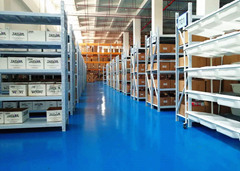
Which is better, self-built warehouse or warehousing outsourcing? Regarding this issue, let me first tell you a true story. At a logistics symposium held in 2015, a large businessman asked Baoshi CEO Shi Yao: "What do you think?Third-party warehousing? "
Shi Yao replied at the time: "Large merchants like you have abundant funds and powerful resources to build their own warehouses, but have you ever thought that there are many small and medium-sized merchants who you ask them to build warehouses, buy hardware and systems, recruit people to manage, and package and ship goods. When the scale is insufficient, the efficiency is either very low or the cost is very high. But as long as they choose to cooperate with third-party warehouses such as Baoshi, they can instantly have the same strong logistics capabilities as you without doing anything. This is also the value of third-party warehouses."
Back to the topic, whether a company builds its own warehouse or outsources warehousing, the key is to look at its own needs and resources. If you have the resources and ability, you can build it yourself, but for most small and medium-sized enterprises,Warehousing outsourcingmay be a better choice. Do you build it yourself or outsource it? Please leave a message in the comment area!
Extended reading:
Advantages of self-building warehouses
1. Inventory is controllable: In the self-built warehousing and delivery model, the inventory is in the hands of the enterprise itself, and the enterprise manages the inventory by itself. The inventory risk is controllable, flexible, and the inventory pressure is small.
2. The receipt can be customized for self-delivery by the company, and a handwritten thank-you letter to the buyer can even be added to the package to better maintain customer relationships and improve customer satisfaction.
3. Enterprises face buyers directly, communicate directly, and solve problems in time.
Disadvantages of self-building warehouses
1、Warehouse managementand shipping will take up a lot of time and energy;
2. When the order volume increases sharply or during activities, the warehouse cannot deliver goods in time, and a warehouse liquidation occurs;
3. The warehousing operation is not professional, and problems such as inaccurate inventory and missed shipments often occur;
4. When the single quantity is not large, [Express LogisticsThe cost is relatively high.
5. The utilization rate is not high. It is difficult to allocate storage area and personnel in off-peak and peak seasons. In peak seasons, there is insufficient warehouse area and manpower. In off-seasons, the warehouse area is idle and the workload of employees is small.